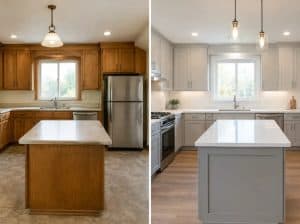
A kitchen can look tired long before it stops doing its job. The doors may have faded, the handles lost their shine and the worktop picked up years of marks, yet the cupboards behind them remain solid and the layout still suits how you cook. In that situation, refacing deserves a serious look before you commit to ripping everything out.
What refacing actually involves
Refacing keeps the existing cabinet carcasses and updates the parts you see and touch every day. That usually means new doors and drawer fronts, along with a fresh worktop, sink, tap and handles. Plinths, end panels and cornice can be matched so the finished kitchen looks designed rather than patched together.
A realistic example
Picture a family kitchen in Cambridgeshire, fitted around fifteen years ago. The units are sturdy, the drawers glide and the hob, sink and fridge are exactly where the owner wants them. What lets it down is the styling: heavy woodgrain doors, curved silver handles and a dark worktop that absorbs light.
Keeping the carcasses, the owner chooses made-to-measure shaker fronts in soft matt grey, finished with slim brushed nickel handles. A pale stone-effect worktop and a composite sink bring in brightness and a more modern feel. Nothing moves, yet the room feels larger, calmer and far easier to keep clean.
Choosing finishes that last
Trends come and go, so it pays to choose colours and materials you will still enjoy in several years. In smaller or darker rooms, warm neutrals, muted greens and gentle blue-greys can lift the space without resorting to stark white. Darker doors can look striking, provided they are balanced with a lighter worktop and good lighting.
Always view samples in your own kitchen. A shade that looks crisp on a phone screen can turn cooler or duller under real daylight and evening bulbs.
When a full replacement is the better route
Refacing is not a cure for everything. Damp, damaged carcasses or a layout that frustrates you daily call for a more thorough approach. The real question is not which option costs less, but which one solves the problems you genuinely have.
Plan the practical details first
Before picking colours, think about how the kitchen works on an ordinary weekday. Is a base cupboard awkward to reach? Would pan drawers serve you better than shelving? Small changes like these can transform everyday use without altering the footprint.
Accurate measuring matters, particularly in older homes where cabinet sizes rarely follow standard dimensions. Bespoke doors, fillers and panels should be planned together so the result feels cohesive.
See it before you decide
Seeing handles, edges and finishes together makes decisions easier. Our showroom in Little Paxton lets homeowners across St Neots, Huntingdon, Sandy, Biggleswade and Bedford compare samples at their own pace. Bring photographs, rough measurements and a note of what bothers you most, and you will leave with a much clearer plan.