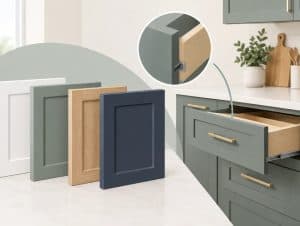
A worn drawer edge, a faded finish or a handle that has lost its shine can make a perfectly good kitchen look older than it is. If the cabinets behind are solid and the layout suits your routine, changing the fronts is one of the most efficient ways to refresh the whole room.
When new fronts make sense
Replacing drawer fronts works best when the drawer boxes and runners still glide smoothly and the carcasses are stable. A tired wrap, chipped laminate or a colour that no longer sits well with the rest of your home is a cosmetic problem, not a structural one.
Minor damage is another good reason. A front that has swollen after a spill, been scratched by a pet or simply endured years of family life can be replaced individually. Bear in mind that matching an older shade exactly is rarely easy, so updating every visible front often gives a more convincing result.
There are limits. New fronts will not rescue units that are water-damaged, out of level or loose, and failing runners should be put right first.
Measure the front itself
Accurate measurements are the foundation of a good fit. The visible front is not always the same size as the drawer box behind it, so measure the existing front in millimetres, checking height and width at more than one point in case it has warped. Note the thickness and the position of the fixing holes on the back.
Take photographs before you remove anything and label each front as it comes off. A run of drawers that looks identical can hide small differences in height or spacing. Consistent gaps between fronts are what give a kitchen its tailored look, so avoid ordering from an estimated opening size.
It is also worth opening every section before you order. Some horizontal lines are false fronts or decorative panels rather than working drawers, particularly around appliances and corner units.
Choosing a style and finish
Shaker fronts add definition and suit both period and contemporary homes. Slab designs feel quieter and more streamlined. Gloss reflects light in a compact room, though fingerprints show more readily, while matt finishes tend to be more forgiving in a busy household.
Colour does much of the work. Soft neutrals calm a lively family space, whereas deep blue, green or charcoal bring character when paired with lighter worktops. Timber effects add warmth without a full redesign.
Handles deserve equal attention
Hardware shapes both appearance and comfort. Bar handles suit clean lines, cup handles flatter classic styles and knobs are ideal for smaller drawers. Check the fixing centres before buying, because mismatched holes can leave unwanted marks. New fronts do give you a clean slate to position handles exactly where they feel natural.
Handleless options look sleek but need careful planning, so test how they feel in use before committing.
Keep the whole kitchen in step
One replacement front can be a sensible repair, but a deliberate makeover looks best when doors, drawer fronts, end panels and plinths are updated together. Adding a new worktop, sink and tap can complete the transformation without the upheaval of a full refit. It also lets you spread the cost, keeping what works and improving what you see daily.
See samples before you decide
A shade that appears warm grey online can look noticeably cooler under your own lighting. Our Little Paxton showroom lets homeowners across St Neots, Huntingdon, Sandy, Biggleswade and Bedford compare finishes, worktops and handles in person. Bring photographs and rough measurements, and we will help you plan a result you will enjoy every day.