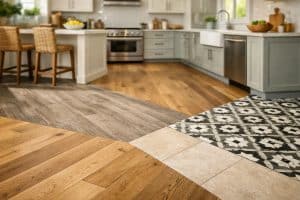
When planning a kitchen update, flooring is often one of the biggest decisions you’ll make. It covers a large area, influences the overall look of the room, and needs to stand up to everything daily life throws at it. From spilled drinks and muddy shoes to dropped utensils and constant foot traffic, kitchen flooring has a demanding job.
The best kitchen flooring combines style with practicality. It should complement your cabinets and worktops while being durable enough to cope with everyday use. Whether you’re carrying out a full renovation or simply refreshing your existing kitchen, choosing the right floor can help bring the whole room together.
What Should You Look for in Kitchen Flooring?
Before comparing materials, think about how your kitchen is used.
A busy family kitchen will have very different requirements from a kitchen used mainly for occasional cooking. Durability, water resistance, comfort underfoot and ease of maintenance should all play a role in your decision.
It’s also worth considering how the flooring will work with the rest of your home. In open-plan spaces, the floor often helps create a smooth transition between rooms, making the overall design feel more connected.
Luxury Vinyl Flooring: A Popular Modern Choice
Luxury vinyl flooring continues to be one of the most popular options for modern kitchens, and it’s easy to see why.
Available in a wide range of wood and stone-effect finishes, luxury vinyl offers the appearance of natural materials while providing excellent durability and water resistance. It is also softer and warmer underfoot than many hard flooring alternatives, making it comfortable for households that spend a lot of time cooking.
Another advantage is versatility. Whether your kitchen features traditional shaker doors or a more contemporary design, luxury vinyl flooring can work well alongside a wide variety of styles.
Porcelain and Ceramic Tiles
Tiles remain a reliable choice for homeowners looking for a hard-wearing kitchen floor.
Porcelain and ceramic options are resistant to moisture, easy to clean and available in countless colours, patterns and finishes. They work particularly well in kitchens that experience heavy use and are often chosen for their long lifespan.
While tiles are highly practical, they can feel colder underfoot than some alternatives. This is something to consider if comfort is a priority, especially during the colder months.
Engineered Wood for Natural Character
For homeowners who love the appearance of real timber, engineered wood flooring can be an attractive option.
Unlike solid wood, engineered boards are designed to provide greater stability when exposed to changes in temperature and humidity. This makes them better suited to kitchen environments while still delivering the warmth and character that only natural wood can provide.
Engineered wood works particularly well in traditional and country-style kitchens, creating a welcoming and timeless feel.
Is Laminate Flooring Suitable for Kitchens?
Modern laminate flooring has improved significantly in recent years and can provide an affordable way to achieve the look of wood flooring.
Many products now offer enhanced water resistance, making them more suitable for kitchen environments than older laminate ranges. However, they generally require a little more care around sinks, dishwashers and areas where moisture is common.
For homeowners working within a tighter budget, laminate can still be a practical and attractive option when chosen carefully.
Matching Flooring to Your Kitchen Design
The flooring you choose should work alongside the other elements in the room.
Lighter floors can help make smaller kitchens feel more open and airy, while darker tones can add depth and contrast. If you’re updating kitchen doors or worktops, it is always worth viewing flooring samples alongside your chosen finishes before making a final decision.
Looking at materials together helps create a balanced design and reduces the risk of colours clashing once everything is installed.
Think Beyond Appearance
Although style is important, practical considerations should not be overlooked.
Consider factors such as:
- Ease of cleaning
- Resistance to scratches and stains
- Comfort when standing for long periods
- Water resistance
- Long-term durability
- Installation requirements
A floor that suits your lifestyle will continue to look good long after the initial excitement of a kitchen makeover has passed.
Finding the Right Balance
There is no single flooring material that suits every home. The best kitchen flooring is the one that balances appearance, practicality and budget while meeting the needs of your household.
Whether you prefer the durability of porcelain tiles, the warmth of engineered wood or the versatility of luxury vinyl, choosing a floor that complements the way you live will help create a kitchen that feels both stylish and functional for years to come.
Taking the time to compare options, view samples and consider how your kitchen is used every day will help you make a decision you’ll be happy with long after the installation is complete.